A wearable flexible exoskeleton that makes virtual objects feel solid.
Paper published in IEEE-VR 2021, Lisbon →
Cost is excluding the VR headset. Product can be built with off the shelf parts.
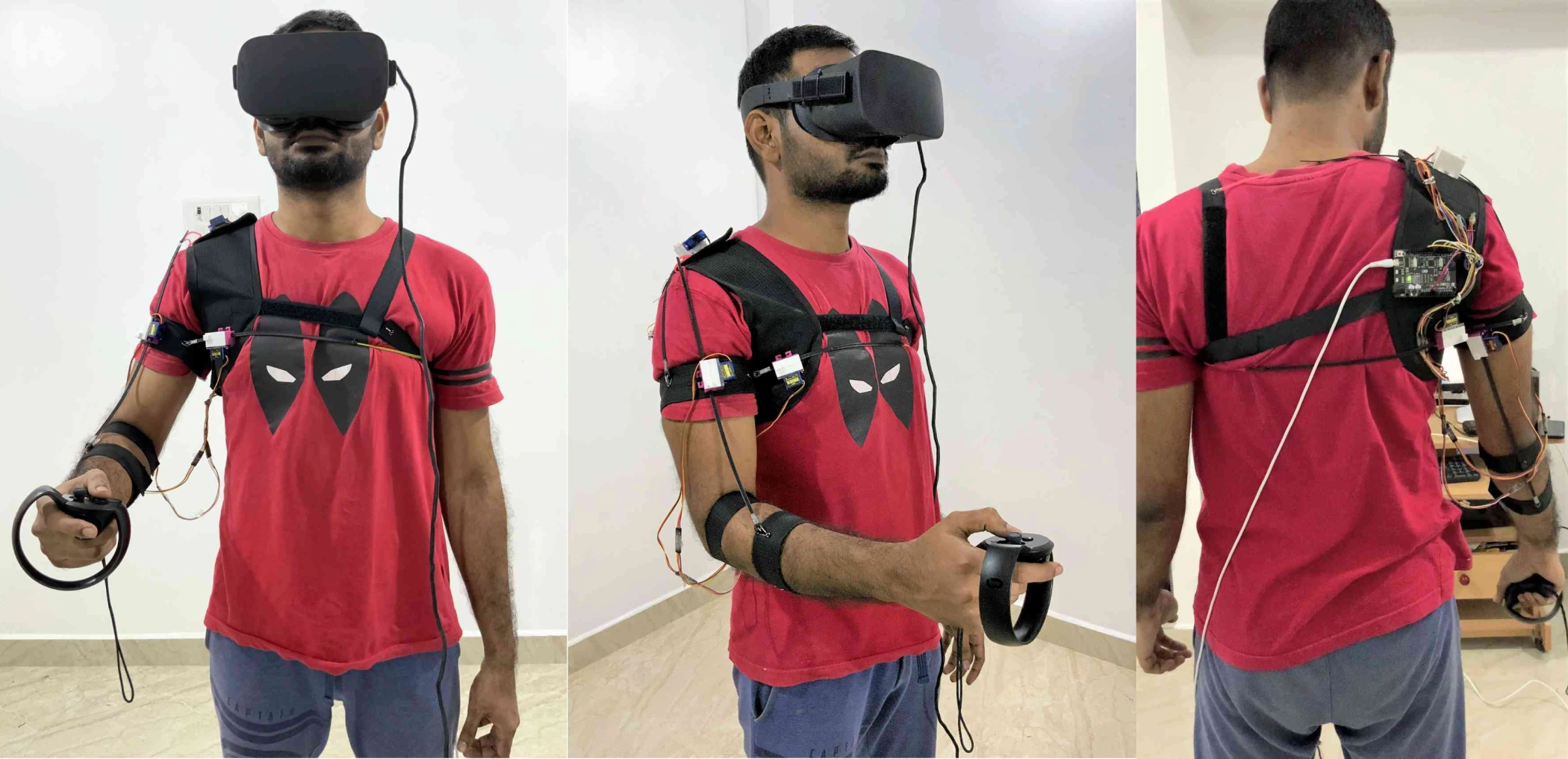
This is a low-cost device I designed that provides motion restriction haptics, built under 900 INR (12 US Dollar).
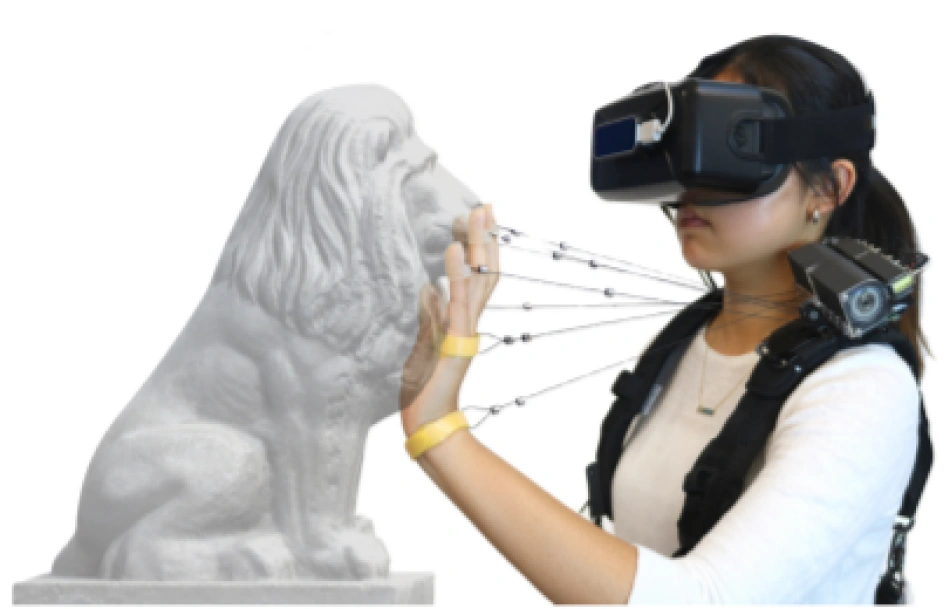
Virtual reality requires high-level haptics to achieve a feeling of realism. The device is a wearable, arm-based flexible exoskeleton made using cable ties, which provides the required motion restriction based on VR interaction.
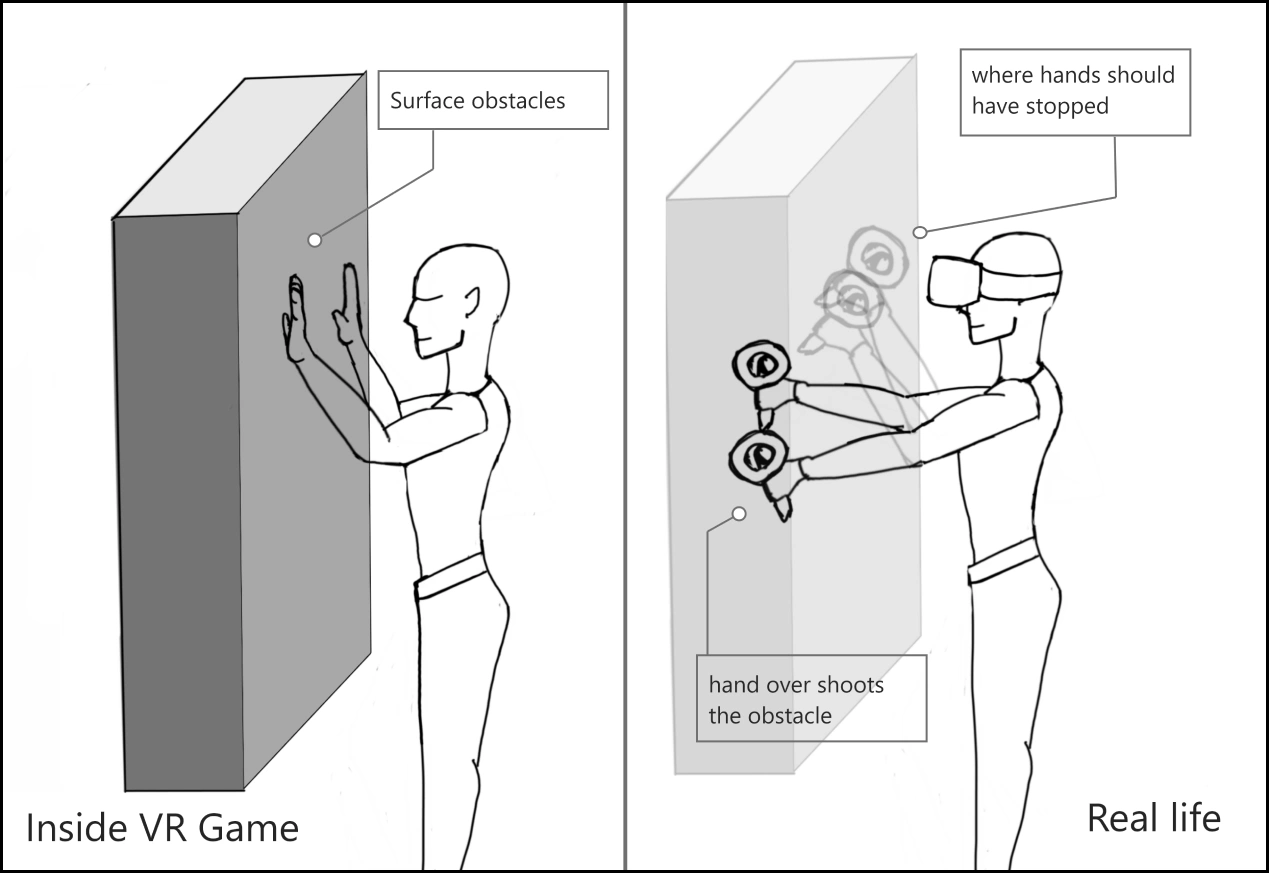
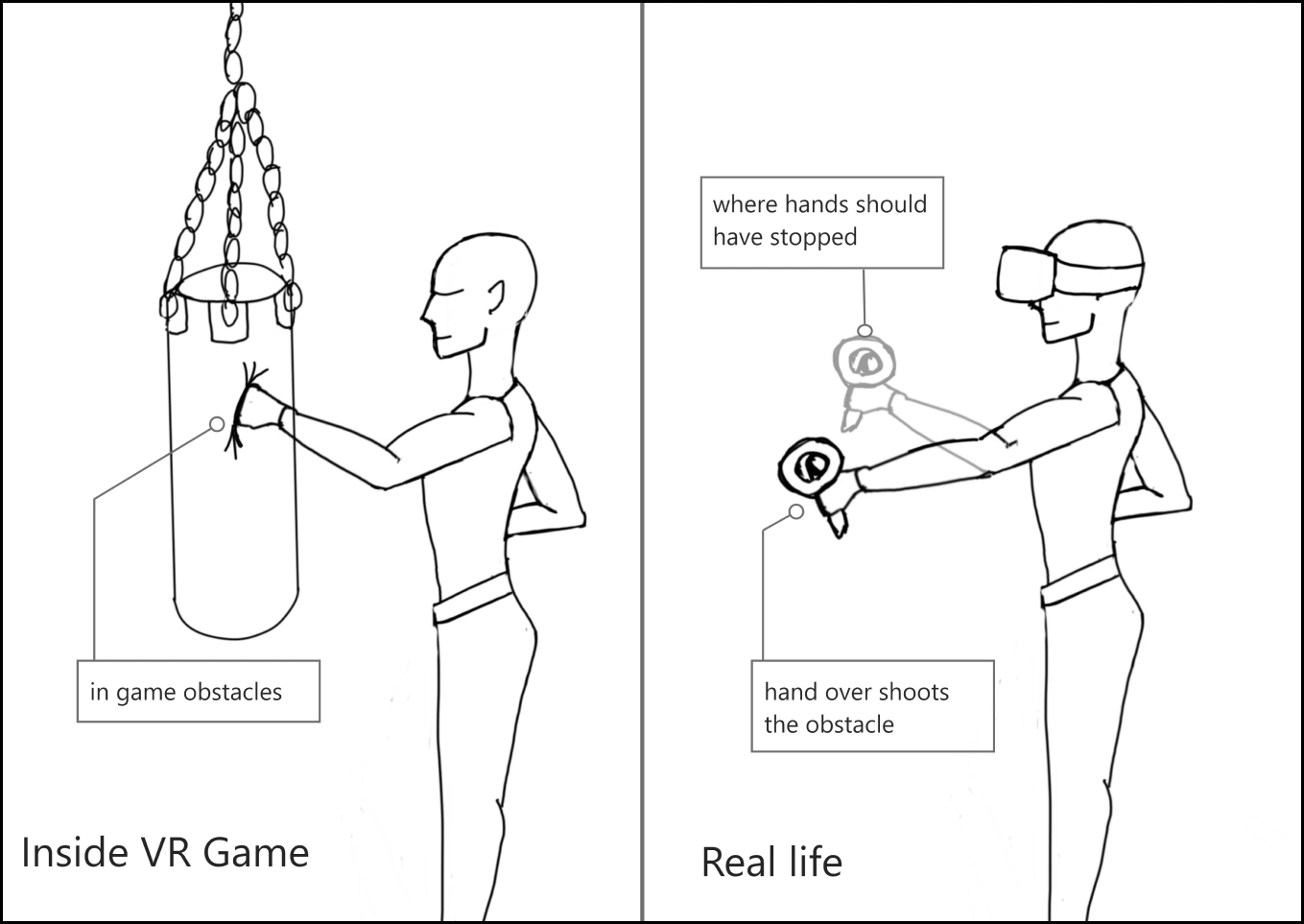
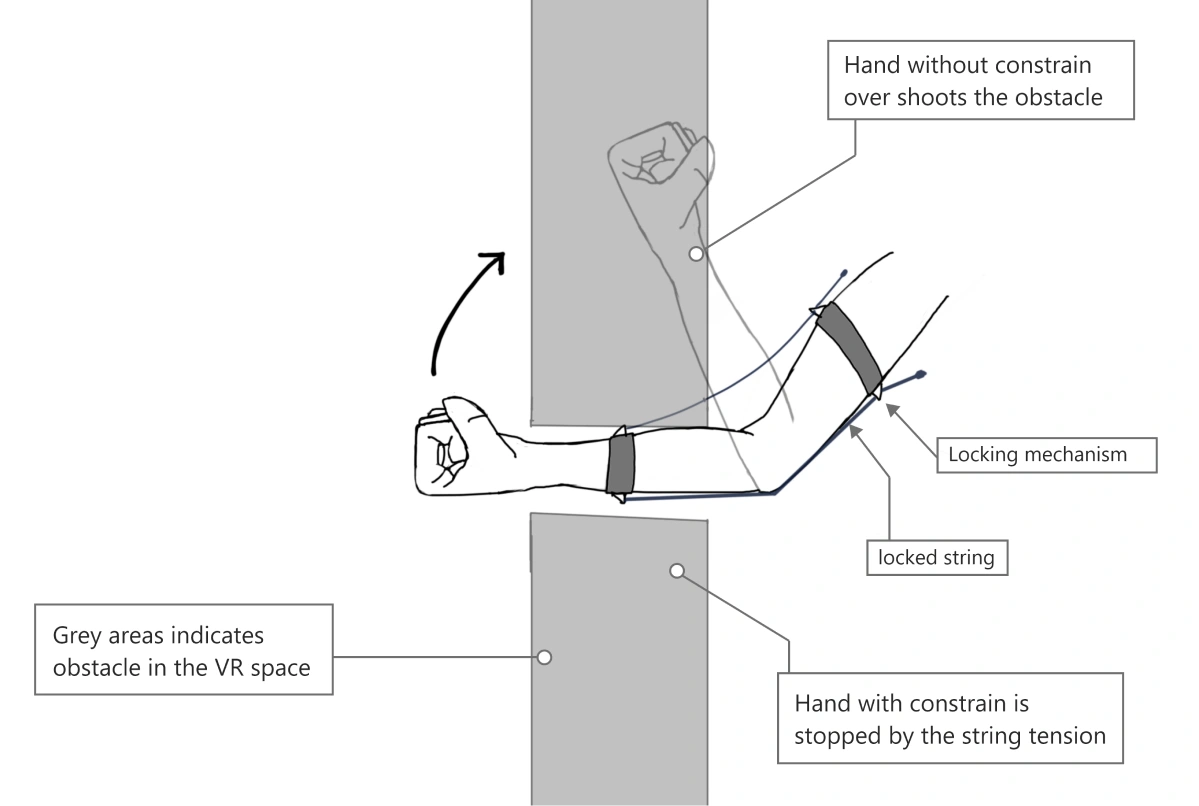
When a player hits an object in VR it's hard to feel the object restricting their motion, since no obstacle exists in the real world in that exact space. This kills the realism.
There is no motion restriction to convey the presence of virtual objects or obstacles โ essential, because interactions in VR are rich and direct.
Rich and sophisticated haptic devices are primarily associated with labs and are not easily commercialised.
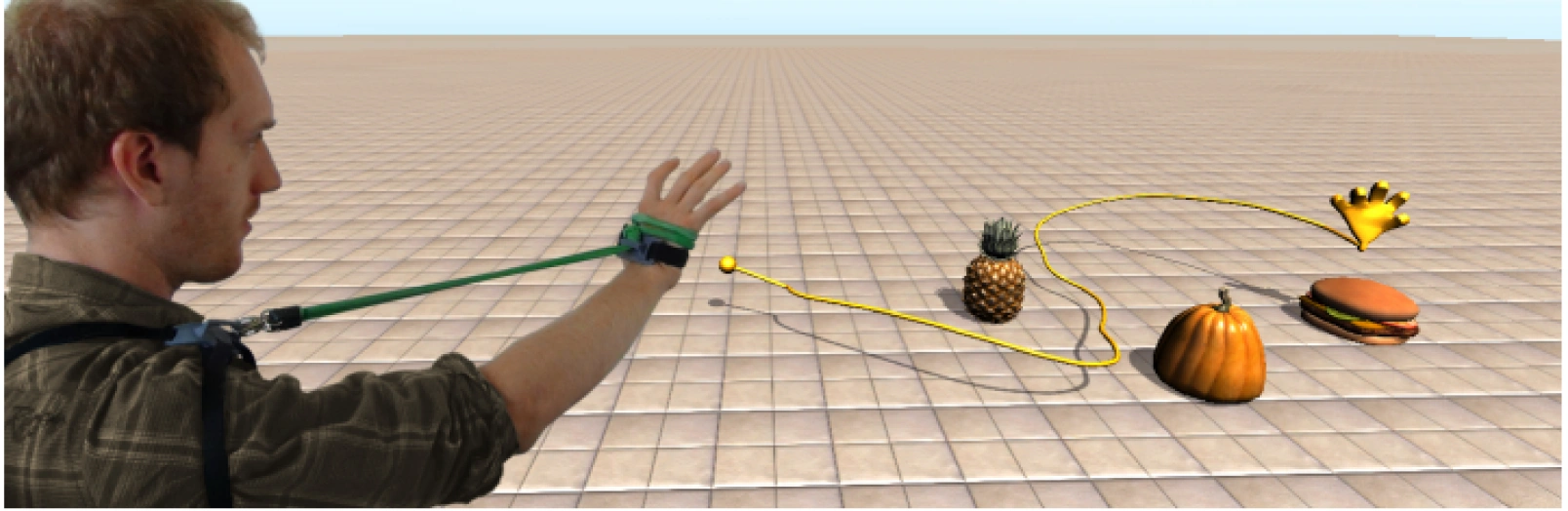
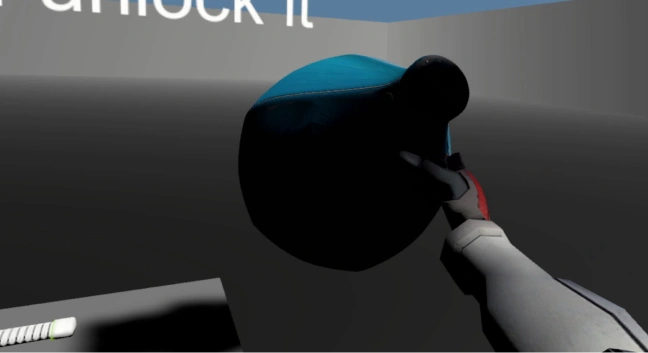
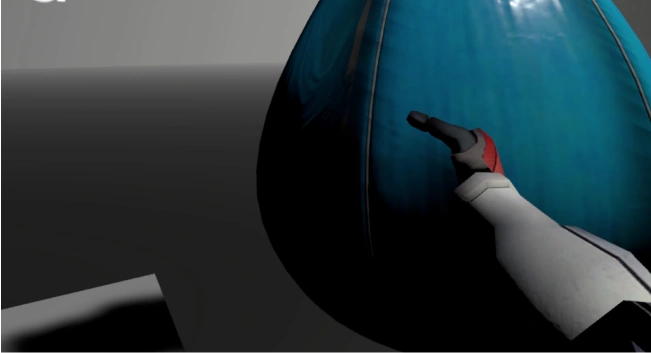
When interacting with rigid objects in a virtual reality environment, the hand passes straight through โ the body gets no signal that contact happened.
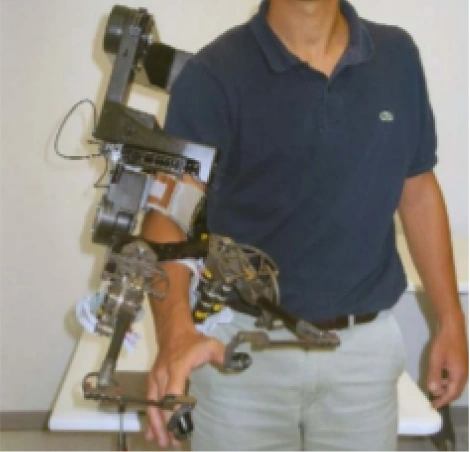
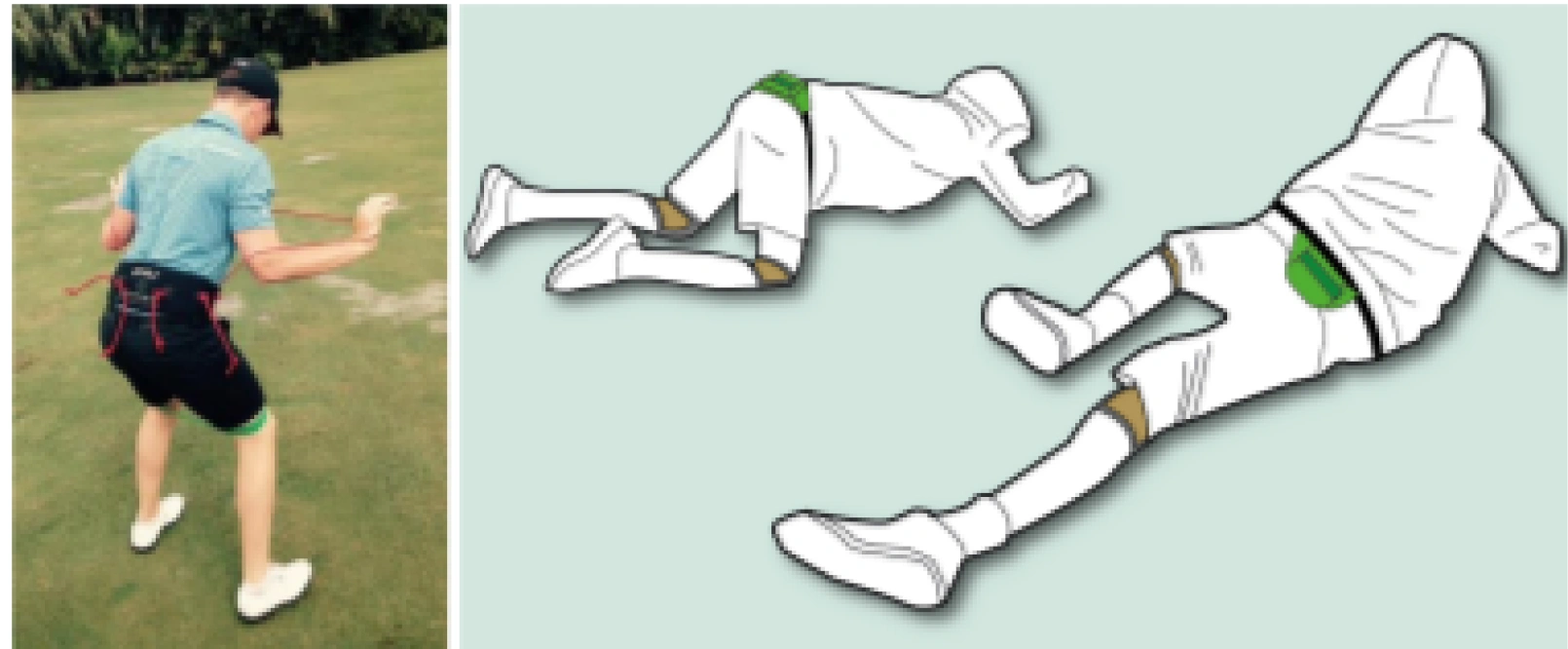
Four existing approaches to arm haptics in VR, and where each one falls short.
Pulling the state-of-art gaps together with the problem statement gave six goals to design against.
Mapping the problem space across three angles before committing to a mechanism.
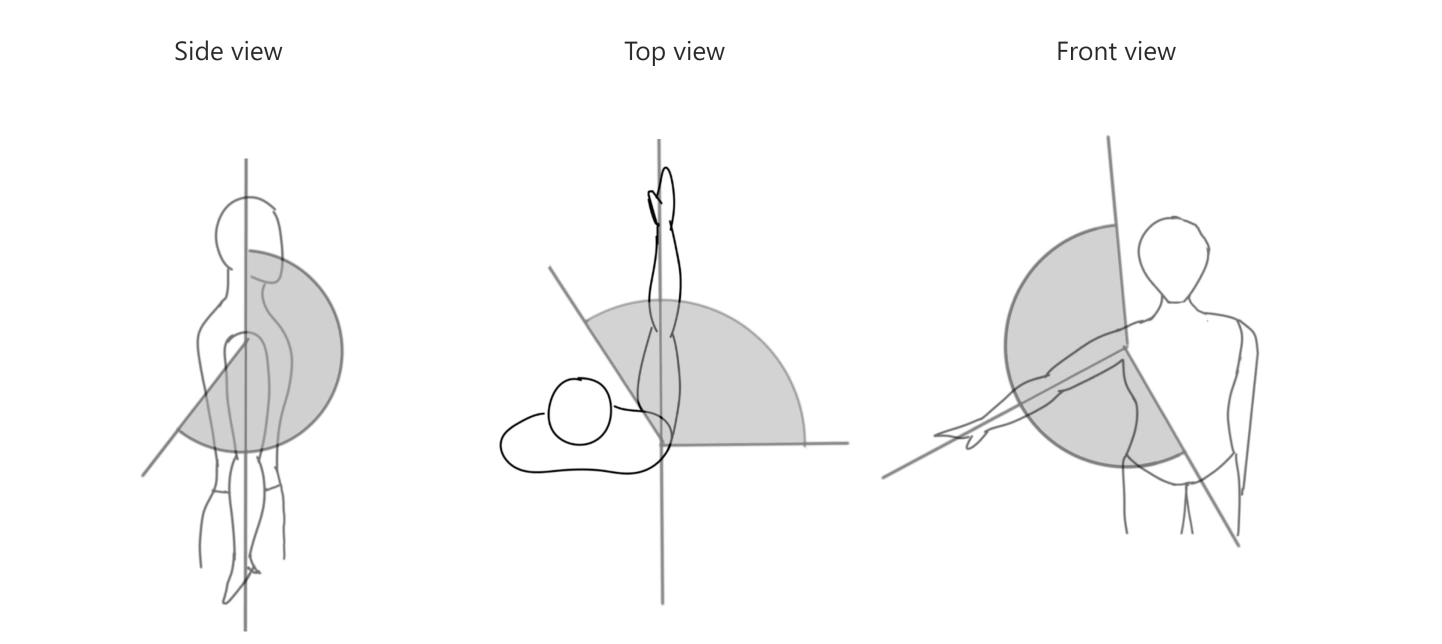
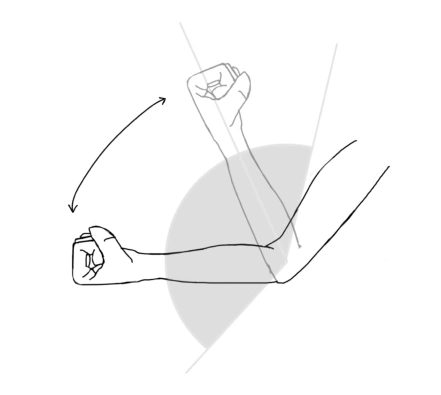
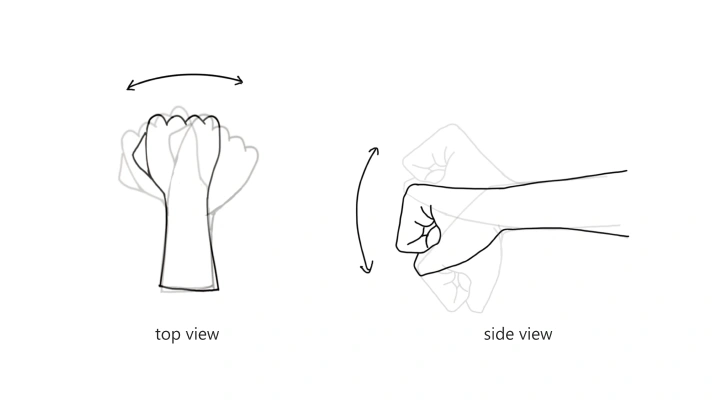
Analysing how far each joint actually travels, so the exoskeleton restricts without fighting the body.
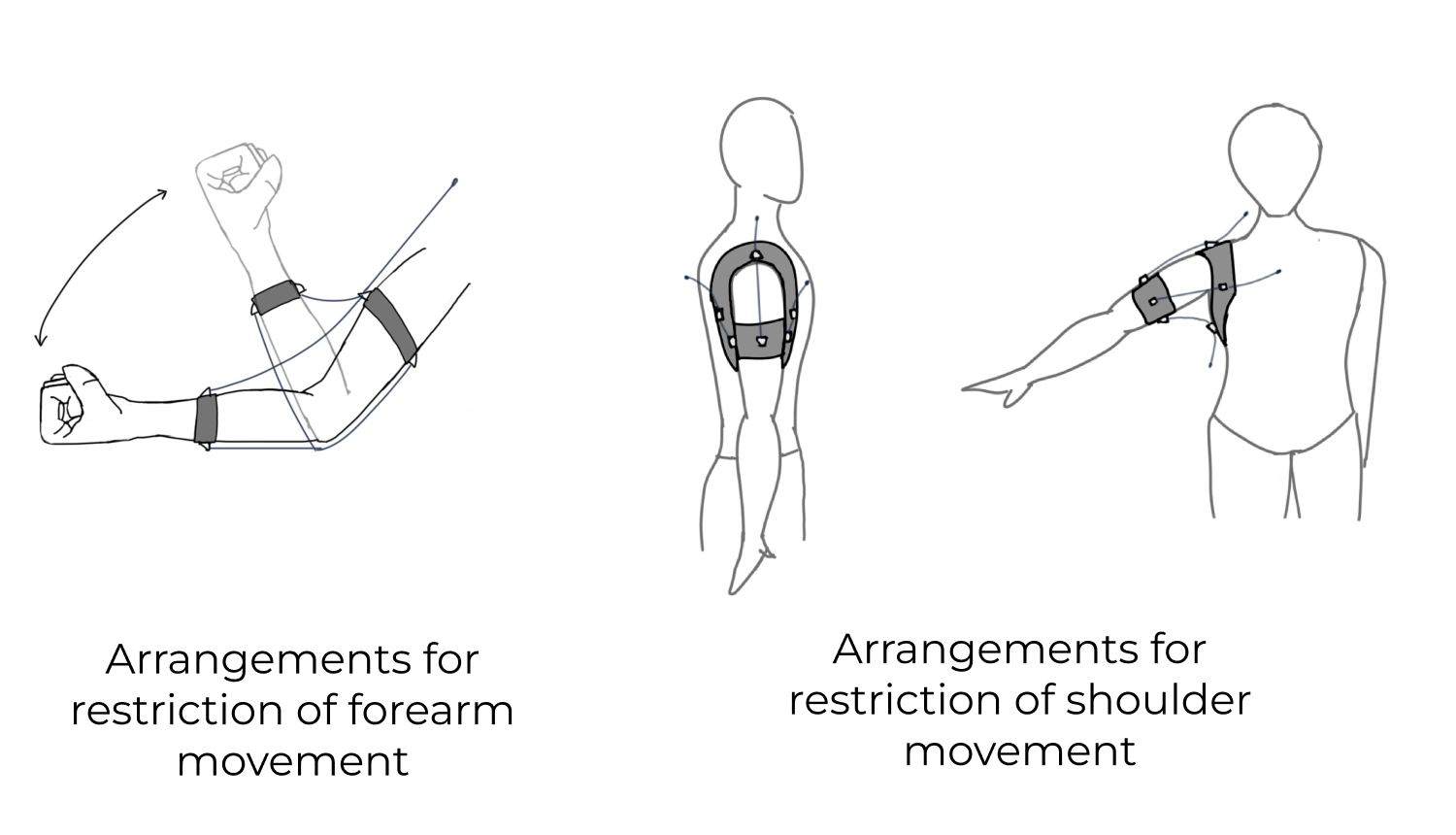
Possible forearm movement
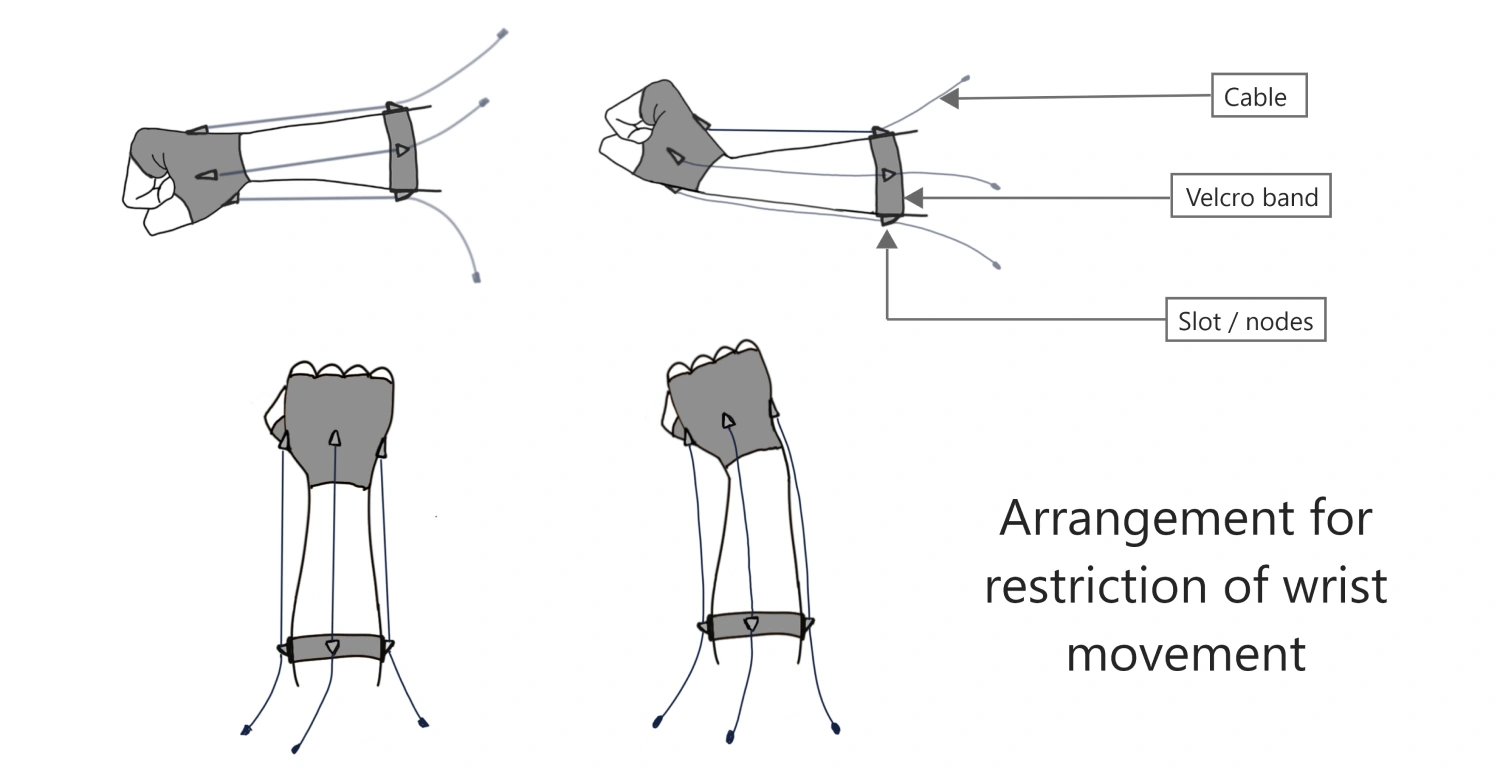
Possible wrist movements
*Grey area indicates the movement space
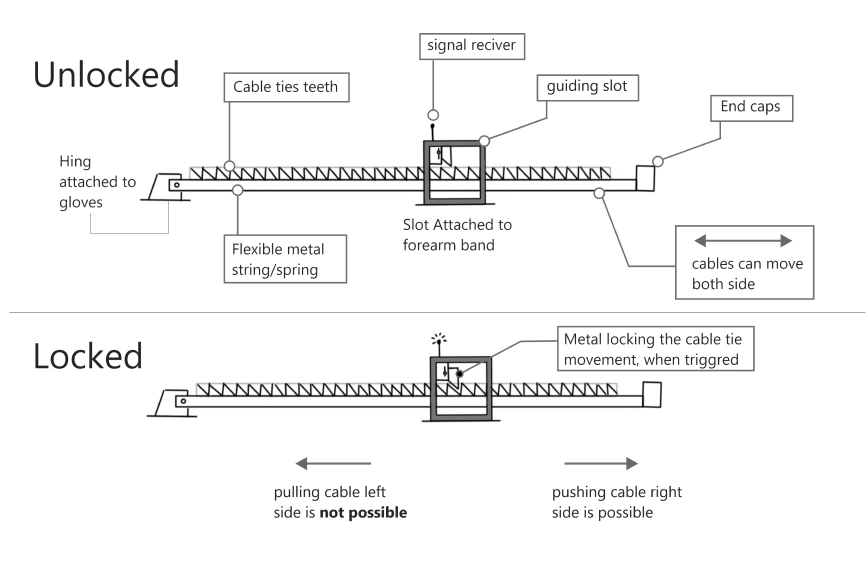
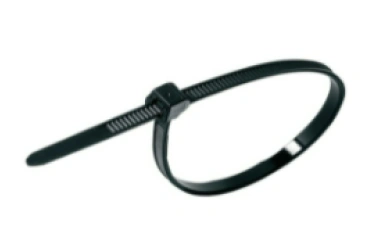
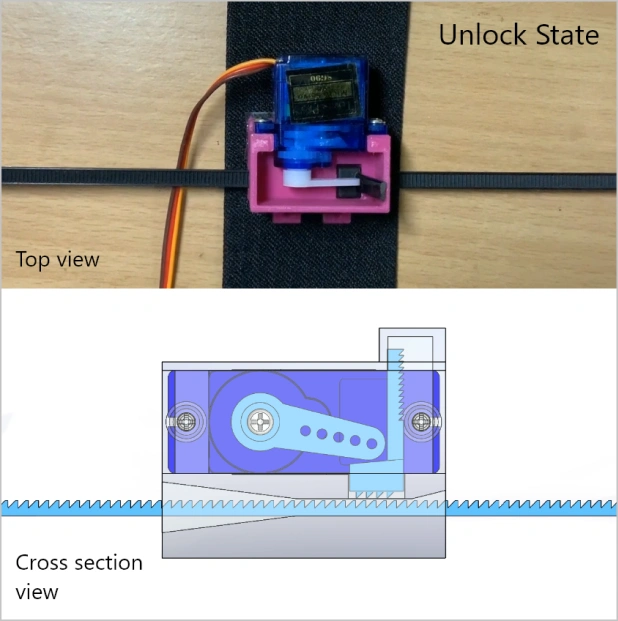
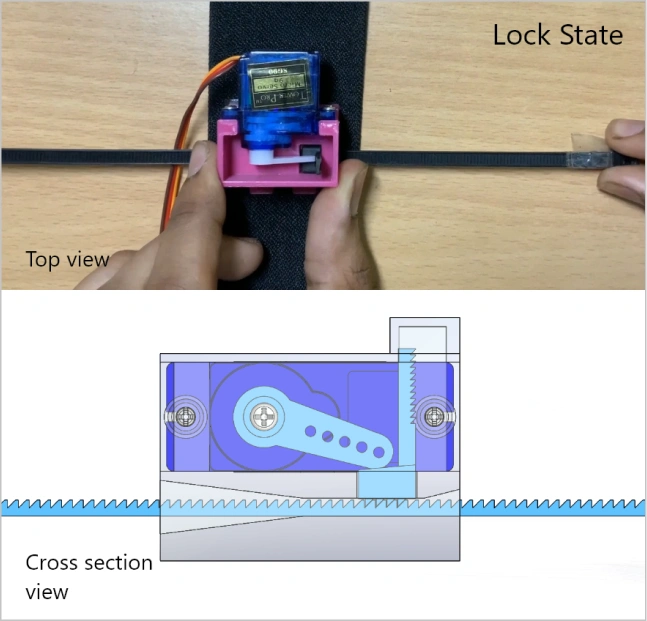
Using cable ties which lock in only one direction and move freely in the other. Making the head controllable creates the opportunity to lock and unlock by program.
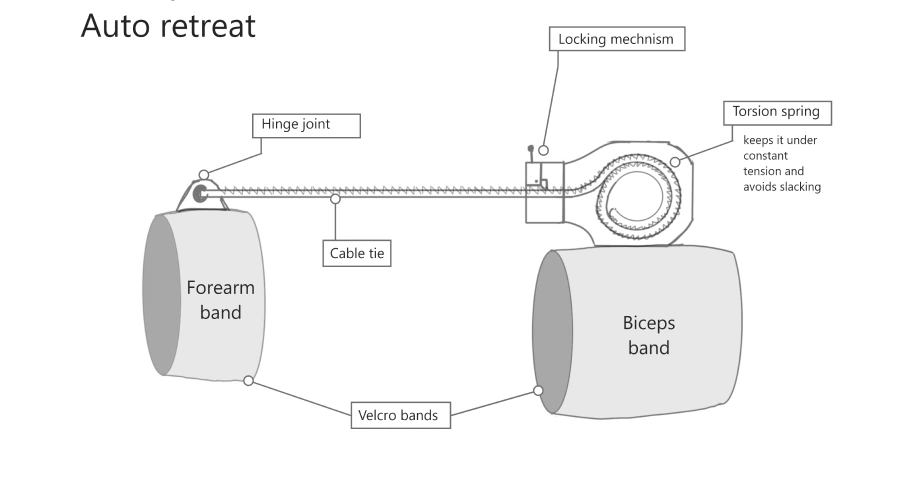
The problem in the previous idea โ the free-hanging cable โ can be hidden inside the slot itself using a torsion spring, which facilitates auto-retreat of the overhanging cable.
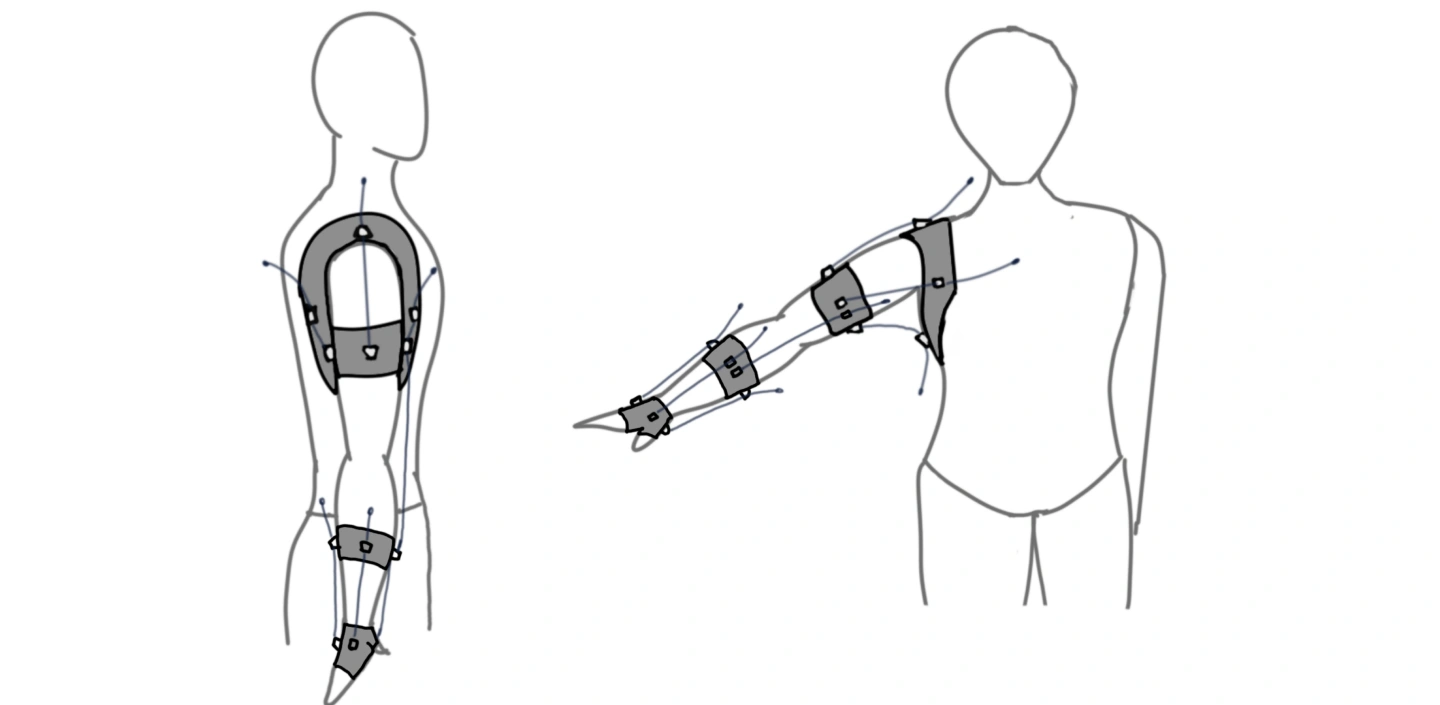
After studying human arm motion and constraints, only the elbow and shoulder joints โ which control the whole limb โ are considered. The arm is connected with several links, each made of cable ties. One end is fixed on the hinge joint, the other attached with rubber bands for a smooth retreat. The cable moves freely through a slot in the casing, which houses the servo motors. An inverse-kinematics rig with the controller as target achieves synchronous arm motion in VR.
Arrangement for restriction of wrist movement
Selecting materials so they are low cost and easily available โ which also makes the DIY model possible.
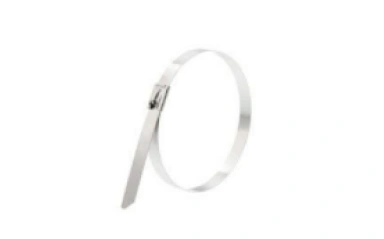
Restraining arm motion requires a large amount of tensile strength, so cable ties were preferred โ they lock in only one direction.
Nylon cable ties are too flexible for operation, so stainless steel cable ties were adhered to them to make them rigid enough.
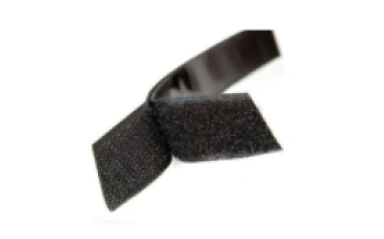
Velcro forms the bands the locking unit sits on, and holds the device firmly on the user's arm.
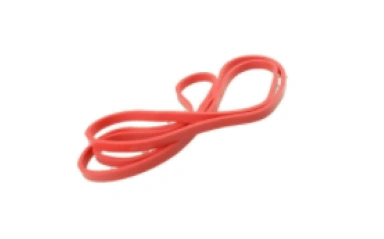
Connected to the rear end of the cable to provide a smooth retreat of the cable back inside the slot.
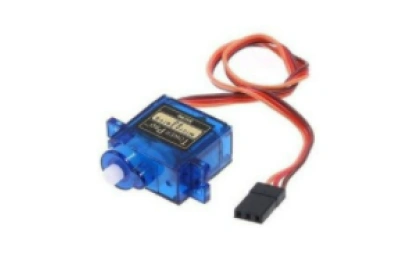
Actuates the cable ties. Under 20 g (9 g motor + 8 g cable ties), 0.1s/60ยฐ speed, and only 15ยฐ of travel โ so latency is negligible.
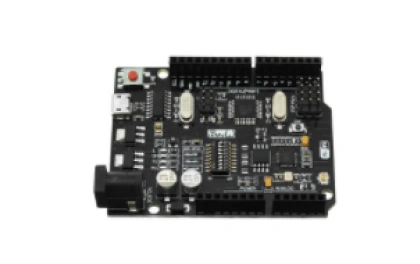
Programs the servo motors to fire based on the signals coming from the game engine.
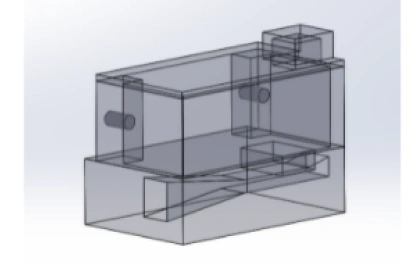
Designed in SolidWorks and 3D printed. Holds the motor, the arm, the cable-tie head and the cable ties in the slot.
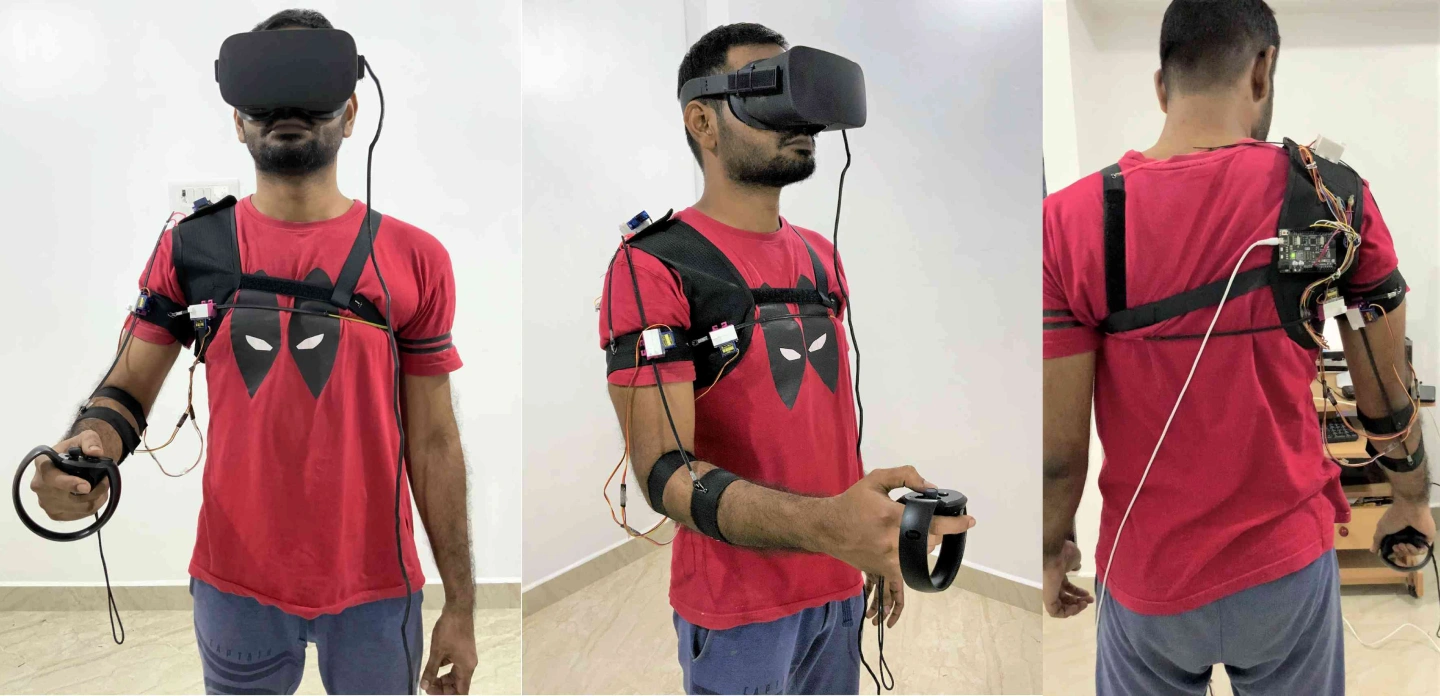
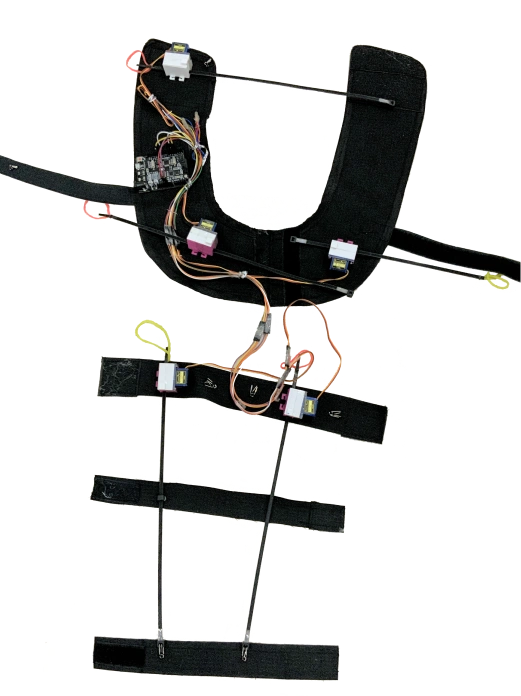
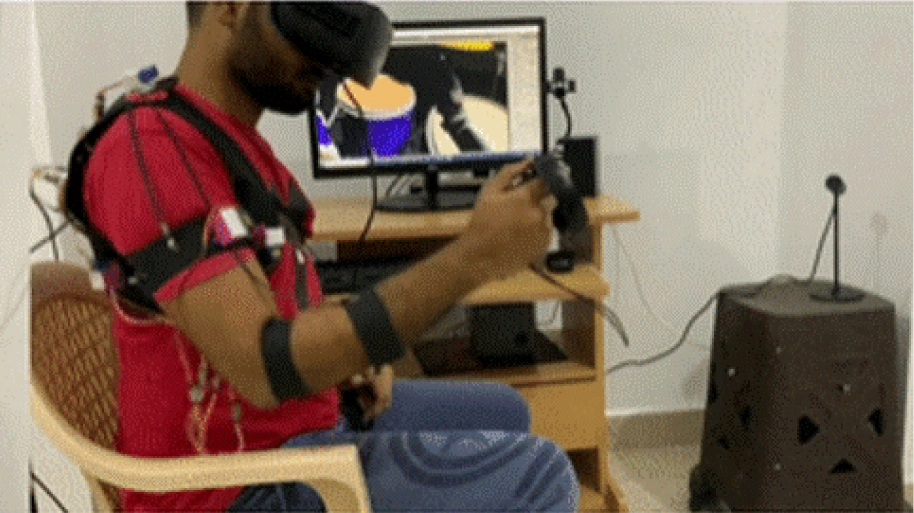
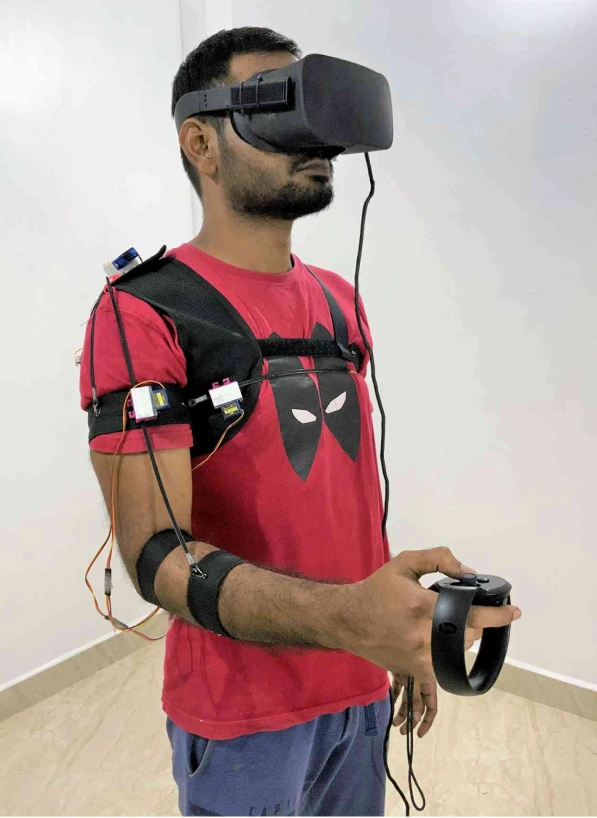
This is how the wearable device looks. You just strap the Velcro around your arm and you're ready to go.
It consists of 5 units of cable mechanism โ 3 for the shoulder and 2 for the elbow joint. The wrist was not included in this prototype.
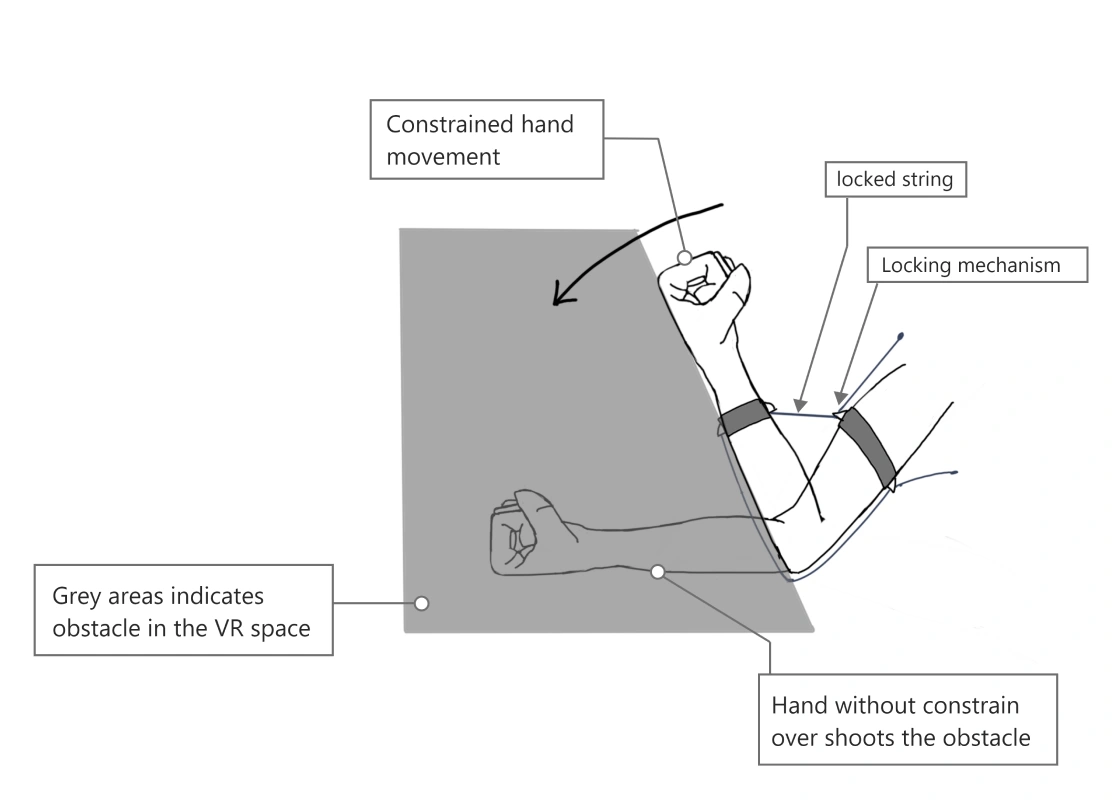
When bringing the forearm down and being stopped by an obstacle in VR space.
Forearm moving toward the shoulder and being stopped by an obstacle in VR space.
The cable-tie head has not been engaged, so the cable ties can move freely in both directions.
The motor detects the signal and exerts a small force on the cable-tie head to engage it on the rack, which completely restricts motion in one direction.
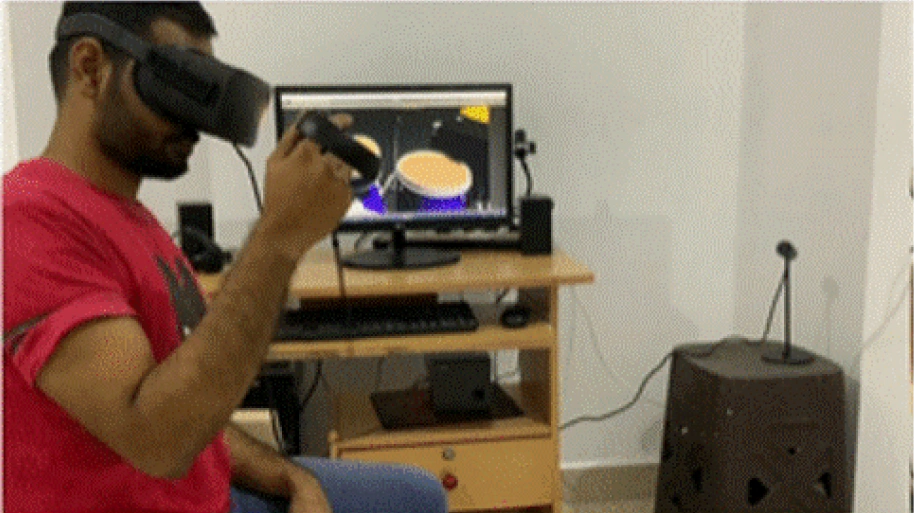
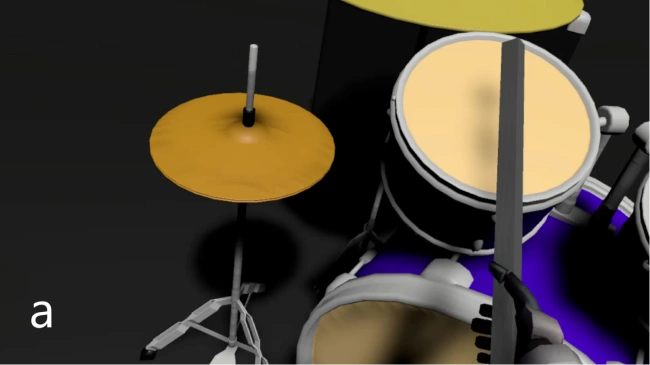
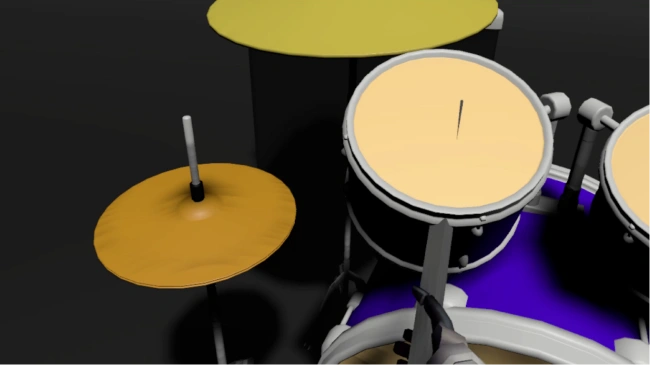
The same drumming action, with and without the device on.
The arm stretches fully with no constraints, even after the stick hits the drum.
The cable-tie link on the biceps locks, so arm motion is restricted the moment the stick hits the drum.
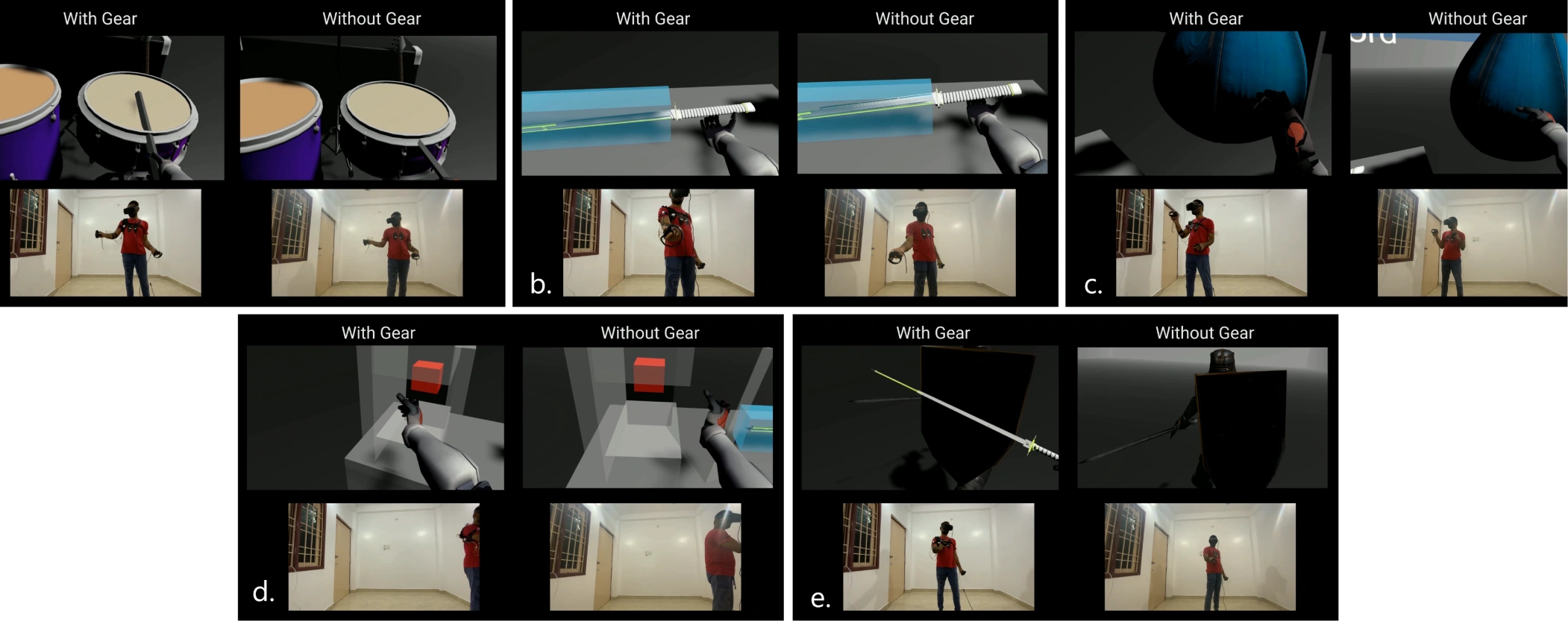
To test the device, 5 types of interaction were built around motion-restriction haptics โ the common patterns you find in VR games: holding an object, and interacting directly with the hand.
Demonstrates collisions with a tool. Uses forearm and elbow movement.


Demonstrates the sense of inertia and gravity of the object.


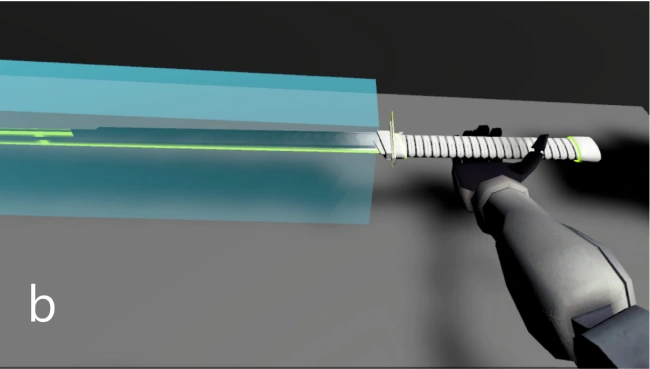
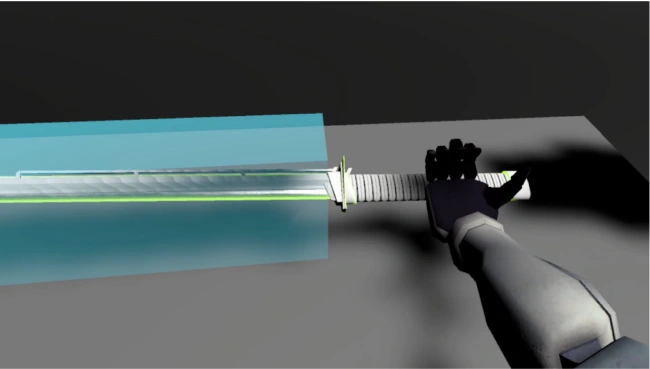
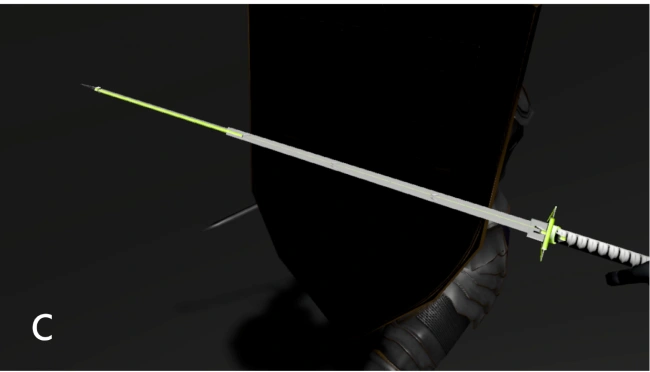
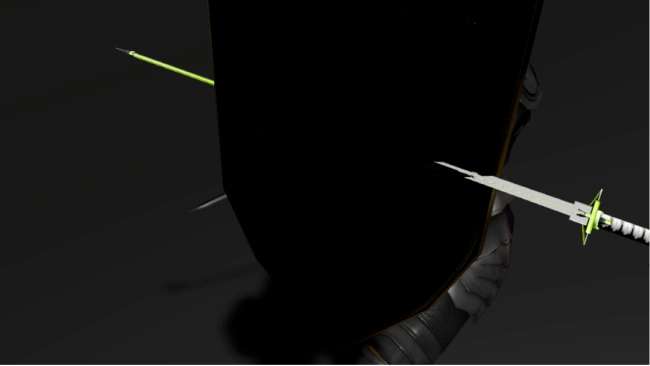
The player defeats an enemy wielding sword and shield โ demonstrates shoulder movement.


The box has obstacles on four sides โ demonstrates touch and lateral motion restriction.


Demonstrates sudden recoil haptic feedback.


*This prototype is for single arm use case, Idea can be extened to whole body use case
Designed for DIY, Every part is off-the-shelf, so anyone can build one
The prototype does not include any finger-based motion restriction โ it predominantly focuses on forearm and shoulder movement.
The concept and prototype were tested on a limited set of users so far. More tests are planned with people of different physiques and proportions.
The prototype's whole build is very cheap โ made under 900 INR (12 US Dollar).
Given the build and cost, it can easily become a commercialised product, or a DIY model once the 3D print files are shared.
Experience a world without light, and navigate using touch, motion restriction and proprioception.
Paper published in ACM Interactive Surfaces and Spaces 2022, Poland →
Touch and Explore is a VR game driven by haptic navigation โ the sense of touch, motion restriction, and proprioception.
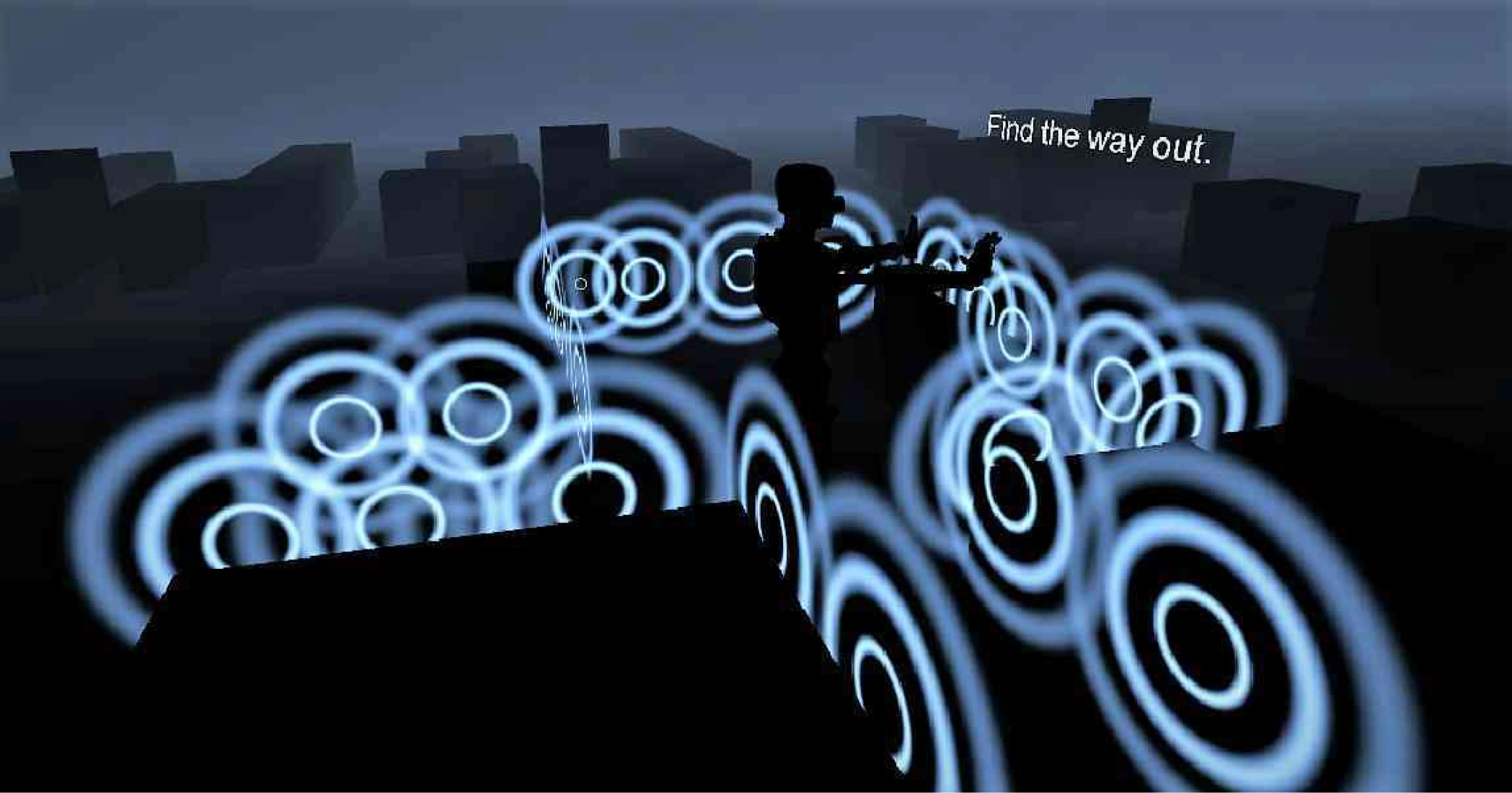
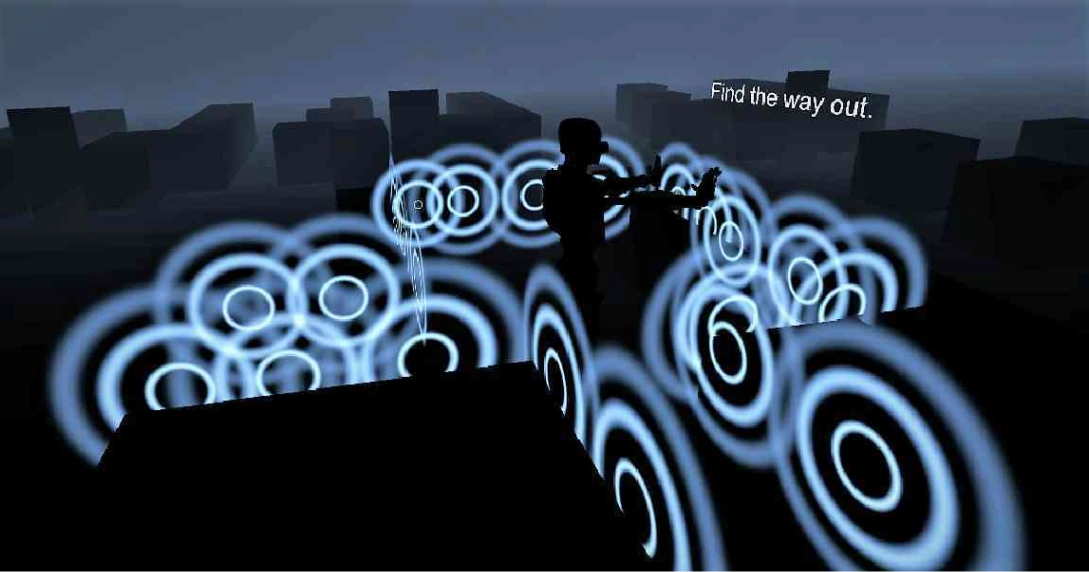
A player standing inside the Touchscape VR game, captured from a second camera. The light waves indicate recorded touches.
Note: the game is completely dark โ ambient light has been added here purely to make the environment readable.
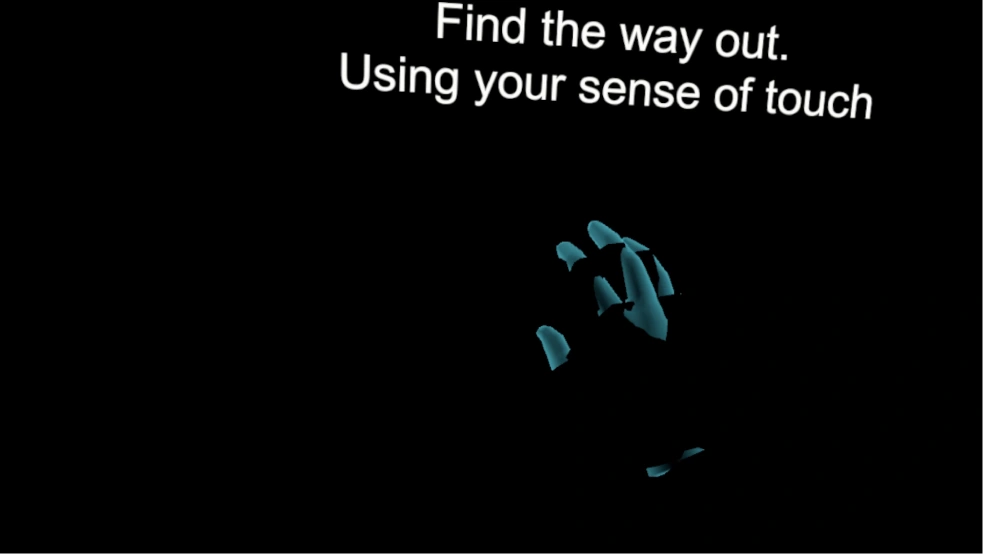
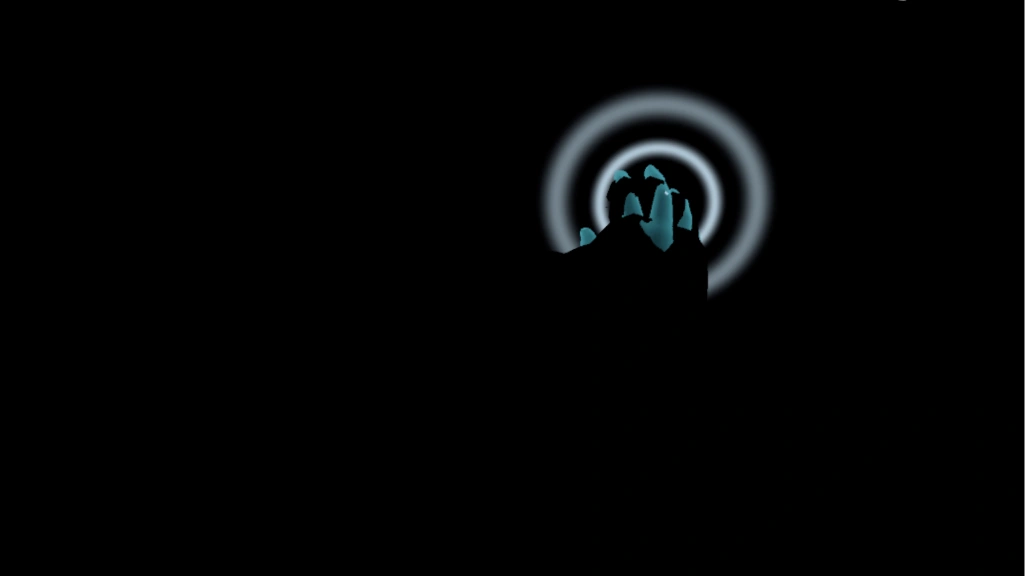
Touching a surface starts to reveal the object's presence through visual cues.
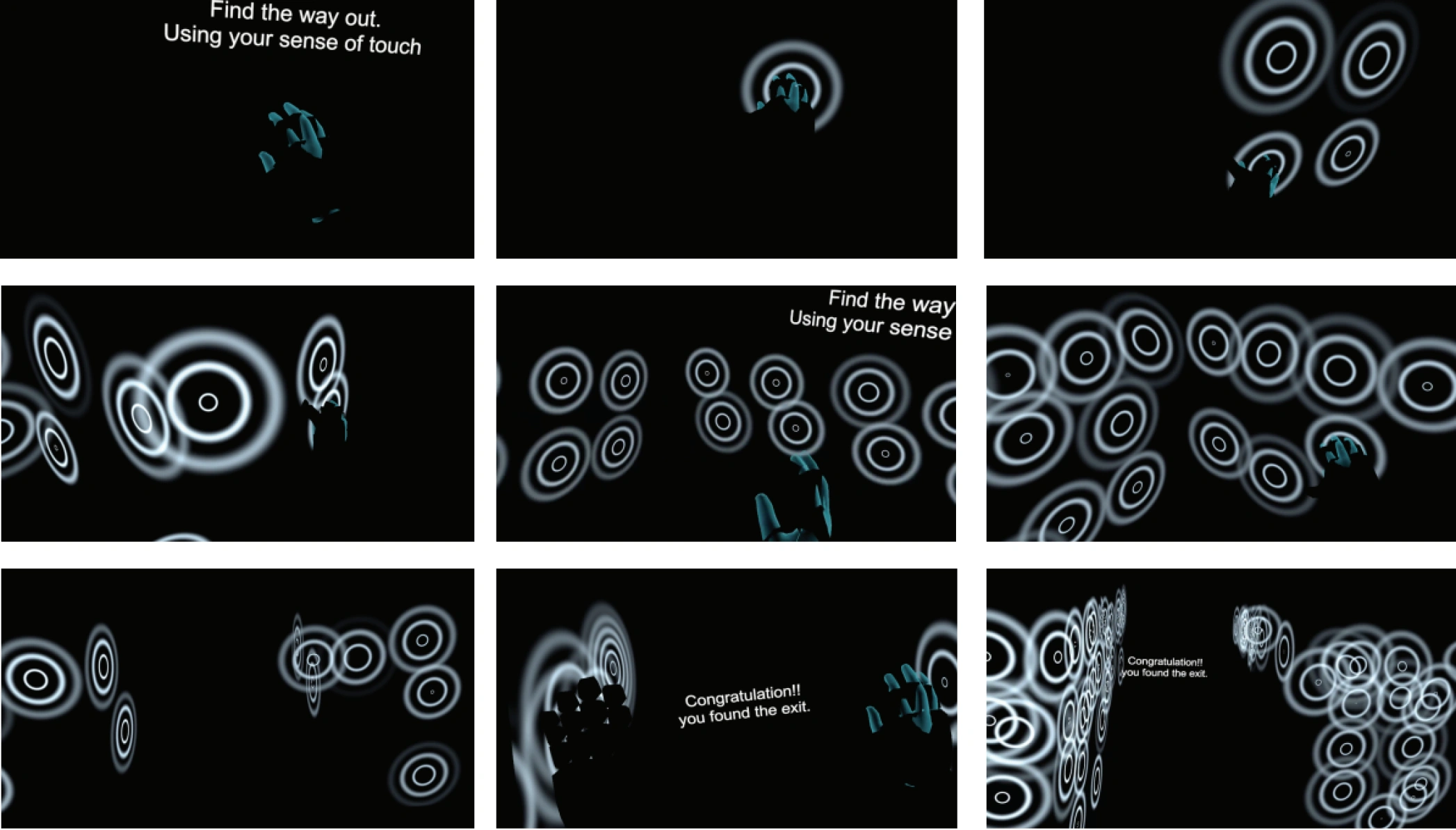
Gameplay screenshots, showing how the player interacts with space to navigate and find their way.
Players initially felt disturbed starting a game in a dark environment without any light โ they slowly adapted to it.
Visual cues are quite intense right now; the intensity can be programmed down.
Exposing players to a completely lightless environment for a long time might have drawbacks. Prolonged research is planned to identify any problems.
Currently the game deals only with arm-driven haptics. Exploring the concept with full-body haptics is planned.
The concept and prototype were tested on two players, so more tests are planned.
This is a novel game concept rather than a full-fledged game โ it deals with haptic-driven gameplay in a VR setting.
The game is highly interactive with the space around the player, and playable only with motion-restriction haptics โ a prototype made specially for it, at a time when similar haptic inventions are blooming.
It could create an opportunity to empathise with visually challenged people, since the gameplay is somewhat similar to what they experience.
Touch and Explore can be a stepping stone for exploring immersion in games using only haptic senses, without visuals.
Combining the concept with spatial audio and echolocation could create even deeper immersion โ arguably a new genre.
Cable ties, rubber bands and โน90 servos delivered genuine motion restriction. Constraining the budget forced clarity about which mechanism actually mattered.
Mapping shoulder, forearm and wrist ranges before designing links meant the exoskeleton restricted motion without fighting natural movement.
A haptic device is hard to argue for in the abstract. Designing Touch and Explore around it turned a prototype into a demonstrable experience.
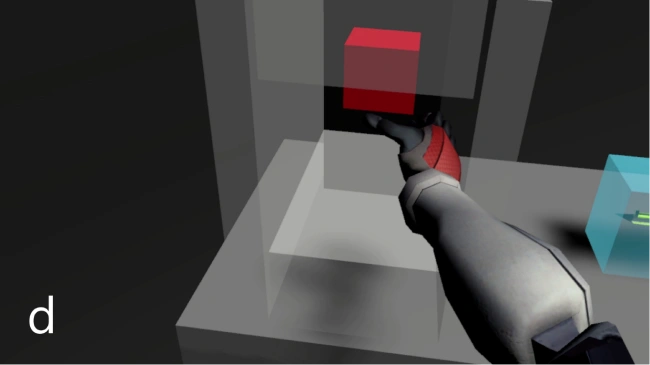
Five distinct interactions โ hitting, lifting, wielding, pressing, recoiling โ surfaced limits a single demo would have hidden entirely.
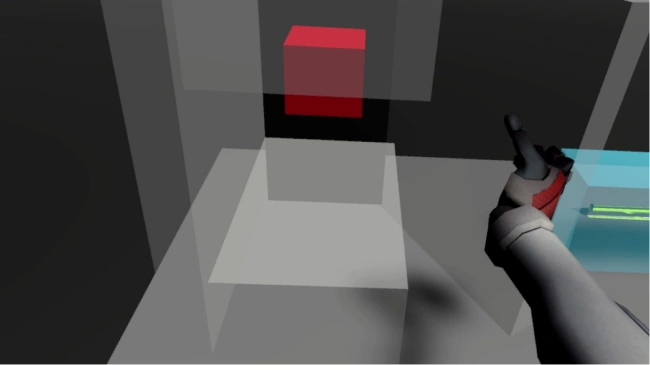
The inverse-kinematics rig, the servo travel and the game's collision events all had to agree. Treating them as one system, rather than a device plus a game, is what made the restriction feel instant.